

Narcissism is a Freudian term that has become perhaps more ubiquitous in the social lexicon than any other derived from psychoanalysis. It is a term that seems to define a generation in the eyes of the media – the Millennials, and one that we use disparagingly to describe celebrities before following them via social media,…

At a recent clinical supervision session in Lewes, my supervisor and I were discussing the realities of being in a long-term relationship. By long-term, we were thinking about decades, rather than months or years, and in this context, we were together considering what individuals must accept about a long-term relationship and thus about themselves. It…

The word ‘mind’ is one that most folks use quite regularly and comfortably. Us psychotherapists use it more often than most. However, to the best of my knowledge, nobody has actually seen a mind. So, what is a mind, and why should we grow one? Those of you who follow us know that at Brighton…

While stigma around mental health issues remains an issue, there is an increasing willingness to talk about mental health issues both in the media and in society as a whole. Even if much of that talk centres around the woefully inadequate state provisions for mental health support and treatment, to some extent, the debate is…

In our last blog, I discussed the correlation between expressed anger and cardiac problems and repressed emotion and back/muscle pain in warring couples. The article gave some interesting insights into the correlation between couples who cannot fight healthily and the poor health they experience as a consequence. So should we avoid fighting? No, we need…

I write a lot about how the mind and body are connected and that our emotions originate in our bodies. I also write about how change happens through learning to be aware of our emotions and being able to feel them without becoming overwhelmed or needing to suppress them. Recently I came across a blog…
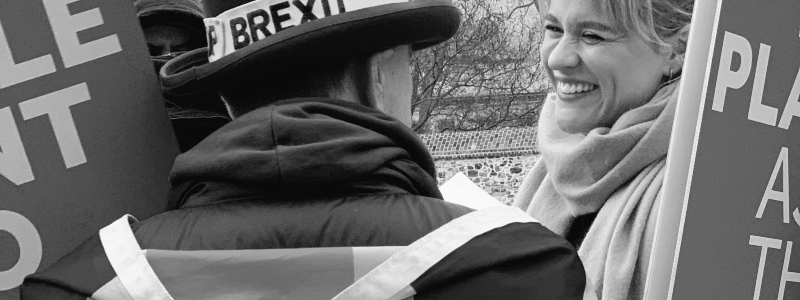
On Friday, everybody in the UK awoke to a new world. The dust has yet to settle and the repercussions of the vote to be enacted; we live in interesting times. Whilst I have a view on whether we should or should not leave the EU, this blog is not about that. It is about…

Does psychotherapy cure addiction? The answer to this question depends very much on whether addiction is seen as a disease in the medical sense of the word, and secondly, on whether it is indeed the goal of therapy to cure. In response to these questions, I would suggest that rather than being a disease (as…

The term ‘affect regulation’ is one that I have written about previously and one that is increasingly used in the world of applied psychology and neuroscience. It can be a very useful term for bringing together psychology, biology and in explaining why good psychotherapy works, so read on! What is regulation? We all regulate (manage)…

It is not unusual for prospective or current clients in psychotherapy to ask, “What is the point of me remembering that and feeling sad, upset, angry (insert whichever uncomfortable emotion comes to mind)?” And even when not posed directly, the question plays in the unconscious through resistance in the therapy and a quick shift of…
Every psychotherapist has a view on what therapy is and how they practice. As I write this blog, I am drawn to my bookshelf filled with tomes by both historical and modern clinicians, detailing precisely how to practice this art that is psychotherapy. Having recently commissioned a set of videos introducing Brighton and Hove Psychotherapy…

We all have bad habits. Some are fairly innocuous and others, at the extreme, can develop into behavioural addictions. Many of us try our hardest to break bad habits, but end up failing miserably. There is a particular time of year – New Year’s – when many of us set out to ‘turn over a…